Temperature control
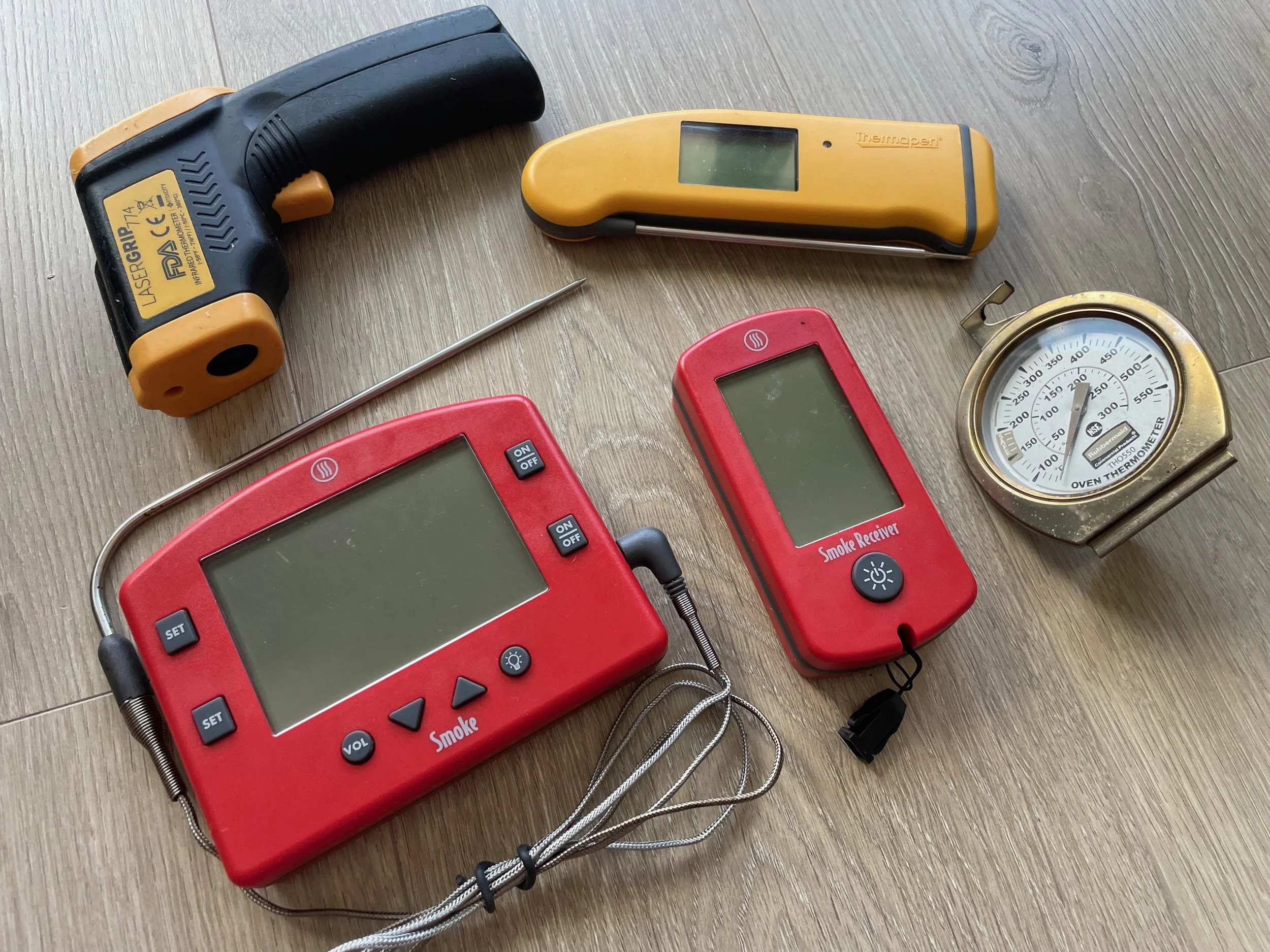
Every bad dinner I've ever eaten had the same root cause: nobody was watching the temp. Not the oven temp — well, actually, sometimes that too. But mostly the food's temp. That's the number that actually tells you when something's done, and eyeballing it is how you end up serving gray chicken or a hockey puck you're calling a ribeye.
I run every protein through a thermometer now, with few exceptions. Here's the initial radio report I give myself before I ever pull something off the heat.
THE REPORT
OUT INVESTIGATING — Situation's still developing. Check it, don't panic.
LIGHT SMOKE SHOWING — Like a can job, it’s easy to handle. Minor correction, no real risk.
WORKING FIRE — Confirmed damage. Time to talk about the save.
SIZE-UP: Know the temperature Before Sending Anyone In
Before you ever probe the food, confirm the temp of the space it's cooking in or on. Every oven runs hot or cold from its dial — my fire station’s oven reads 15°F low, and I only know that because I checked. Same goes for a smoker: the built-in lid thermometer is often reading dome temp, not grate temp, and the two can be off by 30-50°F depending on your rig. And the stovetop pan, be it stainless steel or cast iron, can have the temperature jump on you with one turn of the back to carry on that fire station tall tale.
Response: Keep a separate oven thermometer sitting on the rack — don't trust the dial(they cost roughly $10, so no excuses). When running a smoker, use a remote probe with a grate-level clip, not just the lid gauge (see CAN JOB below). When searing that protein on the stovetop, fire your infrared thermometer on it first. This is your dispatch information. Get it wrong, and every temp call you make after this is based on bad intel.
Tools: Stainless Steel Oven Thermometer and Infrared Thermometer
INVESTIGATING: Guessing Instead of Checking
Symptom: You're poking the chicken and "it looks done." Risk: Undercooked poultry, or — more likely — you overshoot out of fear and dry it out anyway. Response: This is the easiest fix in the book. One instant-read thermometer, probe placed in the thickest part, away from bone. Chicken breast: pull at 160°F; it'll carry over to 165°F while resting. That's it. That's the whole intervention.
Tools: Thermapen One
CAN JOB: Carryover Cooking Catches You Off Guard
Symptom: You pulled the roast at temp, rested it, and it's now 10 degrees past where you wanted it. Risk: A perfectly good piece of meat pushed from medium-rare into medium-well while you weren't looking. Response: Carryover isn't optional; it's physics — the residual heat keeps cooking the exterior inward after the meat's off direct heat. Bigger cuts carry over more (a whole roast can climb 10-15°F; a thin cutlet barely moves). Pull 5-10°F below your target and let the rest do the work. This is where a leave-in probe thermometer earns its keep — you can watch the climb instead of guessing at it.
Tools: Thermoworks Cooking Alarm Thermometers
WORKING FIRE: You Already Overcooked It
Symptom: You checked too late. It's done. Overdone, actually. Risk: Dry protein, a table full of people being polite about it. Response: No thermometer fixes a fire that's already out of control — but you can still save the scene. Slice against the grain, thin, and hit it with a pan sauce or a compound butter to bring moisture back. This won't undo the mistake, but it buys you dignity. Long-term fix: besides the benefits of brining, which buys an escape zone for overcooking, earlier probe placement and a lower pull temp next time. Every overcooked dinner is a lesson for the next shift.
THE TAKEAWAY
A thermometer isn't a gadget; it's a smoke detector for your dinner — it tells you something's wrong before you can see it with your eyes. Know your environment, check your food, and stop treating "doneness" as a guess. Start treating it like a number.