Cast Iron Care
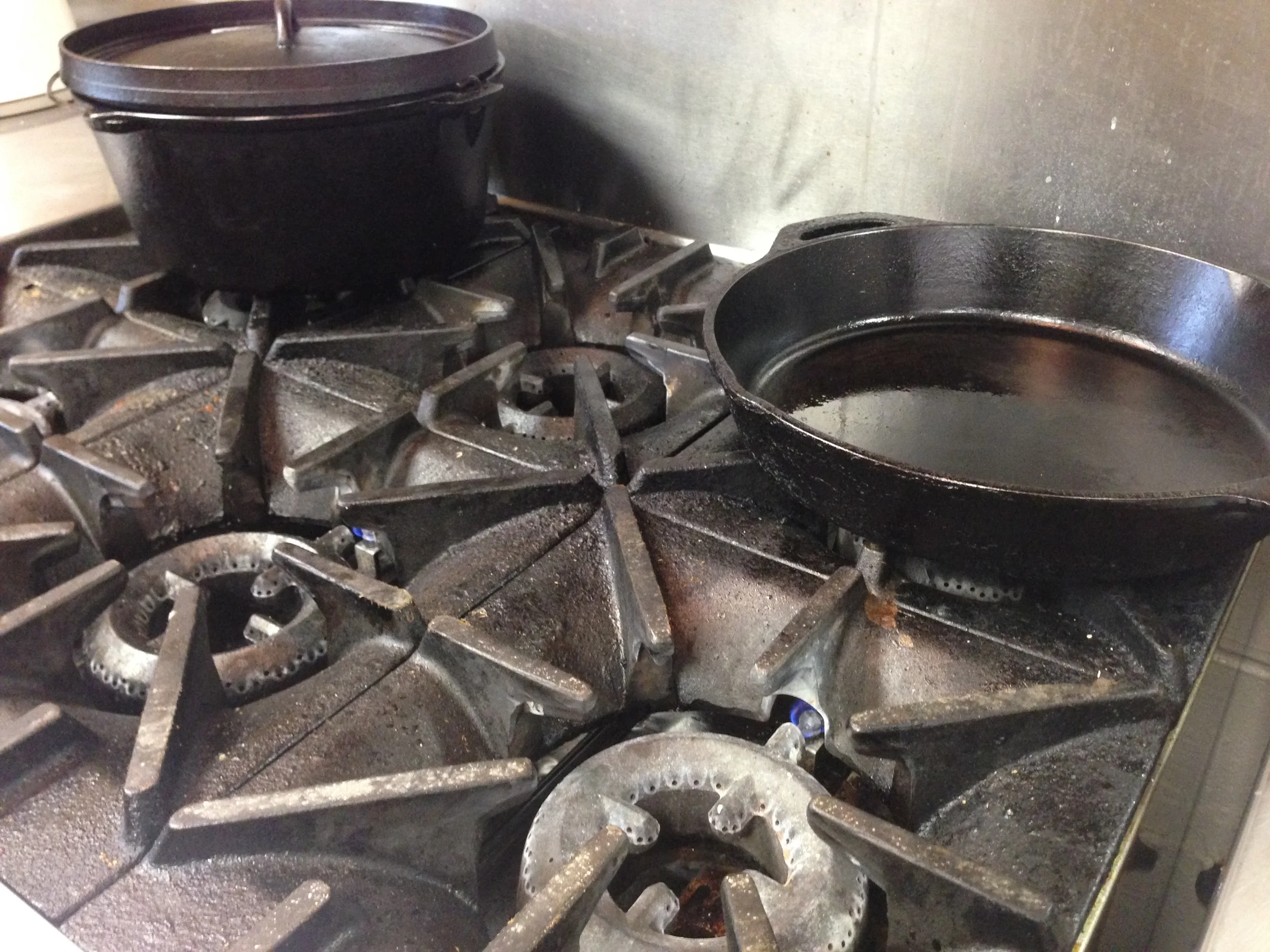
Every skillet in a firehouse kitchen gets treated like the rest of the gear on the rig: checked, maintained, and never let go so long that it becomes somebody's problem at 3 AM. Cast iron doesn't ask for much, but what it asks for, it actually needs. Most of the horror stories I hear about ruined pans come down to somebody skipping the daily stuff and hoping a once-a-year deep clean will cover for it. It won't. Same as anything else that has to work when you need it to.
Cook's Illustrated put out a solid breakdown of cast-iron care a while back, and it's a good baseline. I've run their method through a crew kitchen for years, adjusted a few things, and I'm passing it along the way I actually use it: triaged by how bad the pan actually is, not as one long checklist. (Baseline technique: Cook's Illustrated / America's Test Kitchen, "How to Clean and Season a Cast-Iron Pan")
THE TRIAGE
Routine Call — daily upkeep. This is 90% of what your skillet actually needs. Wipe it out while it's still warm, rinse it under hot water, scrub off anything stuck with a non-metal brush — a little soap is fine; it's not going to strip a properly seasoned pan no matter what the internet tells you. Dry it on the stove over low heat until every trace of water is gone (don't let it air-dry, that's how rust starts), then rub in a thin coat of oil until the surface looks dark and even, not greasy. That's it. Every use, no exceptions, same as checking your gear after every call whether you think you need to or not.
Working Fire — the pan looks blotchy or a little dull. This means the seasoning's uneven, not gone. Heat the pan, wipe in oil with tongs and a paper towel until it just starts to smoke, wipe off the excess, and repeat a few times, letting it cool slightly between rounds. If you'd rather not stand over a stove, the oven does the same job: a thin coat of oil, upside down at 500°F for about an hour, let it cool in the oven after (I do the preventative seasoning of my cast iron in the winter). Either way you're rebuilding the coating, not starting over.
Second Alarm — rust, or seasoning that's actually failed. Don't panic and throw it out — cast iron is close to indestructible. Steel wool and soap first; scrub it back to a level surface. You don't need to strip every last bit of seasoning, just the compromised parts. Rinse, dry thoroughly, and reseason using the working-fire method above. If it's truly gone — deep rust, flaking everywhere — strip it completely and run the oven method five or six times back to back until it comes up dark and smooth. This is the only tier that takes real time. Budget an afternoon, again, in the winter.
WHAT'S ACTUALLY HAPPENING
Seasoning isn't a coating you paint on; it's oil that's been pushed past its smoke point until it chemically changes and bonds into the surface of the metal itself. That's why a rushed pass with cool-ish oil doesn't hold up: you need real heat for the reaction to actually happen, not just a film of grease sitting on top waiting to go rancid or flake off.
Any plain, neutral oil handles this fine, nothing fancy required, and no reason to burn good olive oil on a job; a bottle of vegetable oil handles just as well. Skip anything with sugar in the cure, like bacon fat; it scorches instead of polymerizing cleanly.
AFTER-THE-FIRE CRITIQUES
The fried egg test tells you the truth. A well-seasoned pan releases an egg with no fighting. If it sticks, you're not seasoned yet — no matter how dark the pan looks.
Batch cooking is what actually builds seasoning. A skillet that sees regular high-heat use gets better on its own. The pan that sits in a cabinet between holidays is the one that needs constant repair.
Don't wait for the second alarm. Same as your Halligan, a pan that gets a thirty-second wipe and oil after every use rarely needs the full overhaul. Neglect is what turns a routine call into a working fire.
Cheap cast iron is fine. This isn't a place to spend real money. A plain, well-maintained pan performs the job as well as one that costs four times as much.