Thermoworks Signal
The Run Card
Not every rig runs the same budget, and not every kitchen should have to pretend it does.
A battalion chief with an empty nest and a firefighter three years in with two kids in daycare are working the same shift, wearing the same patch, and buying gear off two completely different spreadsheets. I've been both of those guys at different points in this career, and I'm not going to stand here recommending a top-shelf four-channel console to somebody who's currently negotiating with a toddler over whether pants are mandatory. Good gear advice accounts for where you actually are, not just where the reviewer happens to be standing.
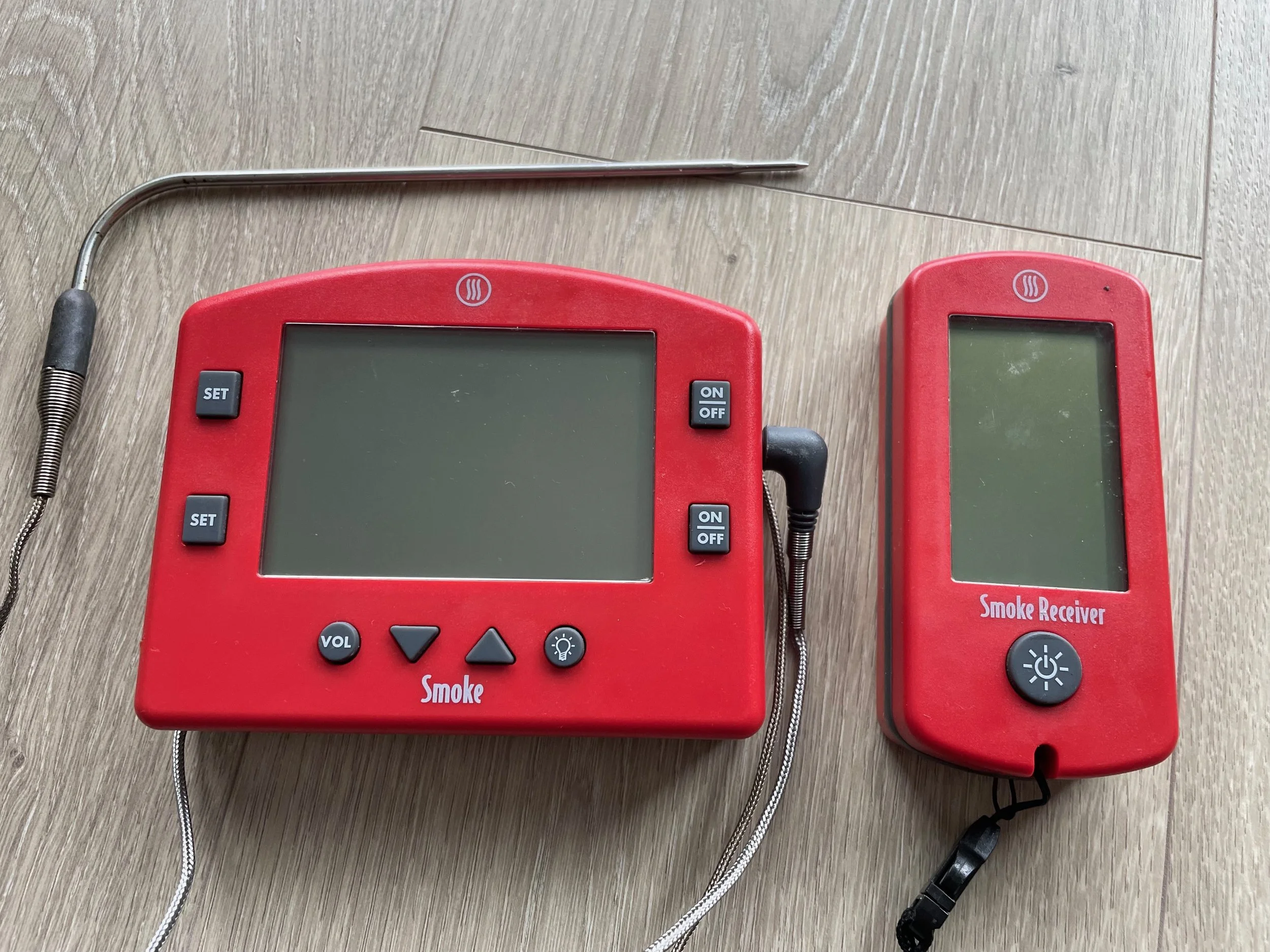
So this one's three tools, not one. The Signals is the multi-channel console I run at my own house — I covered it in detail in an earlier post, and that review still stands. But ThermoWorks also builds a standalone line that does the core job — leave-in probe, real alarm, no guessing — for a fraction of the money and none of the wireless features you may not need yet. The ChefAlarm is the middle rung, and the DOT is the floor. If you're earlier in your gear-buying career than I am, one of those two is the one to actually put in the cart.
The Tool
Signals — four channels, Wi-Fi/Bluetooth, for the incident commander. Runs meat and pit simultaneously, independent high/low alarms on every line, works standalone off the console or through the ThermoWorks app for remote graphing and alerts. Commercial-grade Pro-Series probes, splash-resistant housing, expandable with a Billows fan for automated pit control (how I miss my smoking meat days). This is the tool for somebody running multiple cuts, multiple channels, or who's decided the app-based monitoring is worth paying for. It's the right tool. It's also the top of the price ladder by a wide margin, and most of that premium is buying you channels three and four, plus the wireless.
ChefAlarm — one channel, no app, the Goldilocks buy. This is the workhorse, not the stripped-down version. Same NIST-traceable Pro-Series probe accuracy — ±1.8°F across the range you'll actually cook in. Same IP65 splash resistance. It adds a built-in timer running alongside the temperature reading on one display, and the alarm hits 92 dB, loud enough to hear over a kid's birthday party in the next room, which — speaking from experience — is a real design requirement and not a marketing line. What it doesn't have: a second channel and Wi-Fi. One probe, one job. If your cook only has one thing that actually needs watching — the meat — that's not a missing feature; that's the whole point.
DOT — if the ChefAlarm is still more than this month's budget allows. Same single-channel, same Pro-Series probe compatibility, no timer, no adjustable low alarm — you set a target, it beeps when you hit it. It's the floor of the lineup, and it still does the one job that matters: it tells you when to stop guessing and go check. Nobody needs to feel bad about starting here. I'd rather see a guy running an entry-level DOT correctly than a top-shelf setup he resents having bought.
The Tactic
The tactics from the Signals review still apply — set your low pit alarm loose (around 15°F under target) and your meat alarm tight (5–8°F under your actual pull temp, to account for carryover) — but a single-channel unit like the ChefAlarm or DOT forces a decision the four-channel version doesn't: you only get to watch one thing automatically. Pick the one where a miss actually costs you something.
On a fast cook — a roast, a chicken, anything under two or three hours — that's almost always the meat. Ovens and grills hold their own temperature well enough over a short window that you don't need an electronic babysitter on the heat source; you need one on the exact moment the protein's ready, because that window is short and unforgiving. Put the ChefAlarm or DOT on the meat, alarm it under your pull temp, and check the pit or oven the old-fashioned way — with your eyes, on your own schedule.
On a long cook — anything past four or five hours, a real low-and-slow — flip that logic. The pit temp is what actually drifts over that kind of time, and a fuel or airflow problem three hours in costs you the whole cook if you don't catch it. Put the single channel on the pit, alarm it loose, and check the meat manually at your usual milestones. You're trading automatic doneness detection for automatic disaster detection — on a long cook, disaster detection is worth more.
Either way, the probe placement rules don't change with the price tag. A probe touching metal or buried in coals is lying to you whether it came off the bottom shelf or the top one.
After-the-Fire Critiques
Buy for the cook you actually run, not the one you're planning to run someday. A four-channel console sitting mostly idle on one probe is money that should've gone toward probes, fuel, or literally anything else. Upgrade when the second channel becomes a real bottleneck, not before.
All three share a probe, not a mission. The Signals, ChefAlarm, and DOT all run Pro-Series probes with the same accuracy. You're not paying for a better read as you move up the lineup — you're paying for more simultaneous reads, a timer, adjustable alarms, and remote access to all of it.
Single-channel means you commit to a decision, not that you're under-equipped. Meat on a short cook, pit on a long one. That's not a compromise; it's just triage — the same call you'd make with any one resource covering two problems.
A loud alarm is a feature, not a spec-sheet afterthought. The 92 dB on the ChefAlarm is genuinely useful in a house with kids, a TV, and a dog. Don't discount it just because it's not flashy on paper.
Indulge.
The Verdict
Signals — 🔥🔥🔥🔥 (4 Alarms). Excellent tool, priced like one. Right pick once multi-channel monitoring is actually solving a problem you have.
ChefAlarm — 🔥🔥🔥🔥 (4 Alarms). Same accuracy, a quarter of the channels, a fraction of the price. For most one-probe cooks, this is the smarter buy, not just the cheaper one.
DOT — 🔥🔥🔥½ (3.5 Alarms). No frills, no timer, still tells the truth. The right call when the ChefAlarm isn't in this month's budget, and the DOT is.